
If you were suddenly teleported back to the Triassic period and found yourself being chased by a terrifying meat-eating reptile, you might struggle to tell whether it was a dinosaur or not. While dinosaurs did rise to dominance in the Jurassic and Cretaceous periods, they were just one of many archosaur groups thriving in the Triassic, a world still recovering from the worst mass extinction in Earth’s history.
The planet was hot, dry, and unfamiliar to what we know and live in today.1: Go to reference 1 at the end of the page There were no polar ice caps, and most of Earth’s continents were fused into a single supercontinent called Pangaea.2: Go to reference 2 at the end of the page This created vast inland deserts and extreme seasonal shifts. The climate was harsher and more unpredictable than today’s, with intense heat in many regions. Early dinosaurs were just beginning to appear, sharing the land with other ancient creatures like therapsids,3: Go to reference 3 at the end of the page which were stem mammals4: Go to reference 4 at the end of the page (species on the evolutionary line leading to modern mammals) that had once dominated the Permian.5: Go to reference 5 at the end of the page
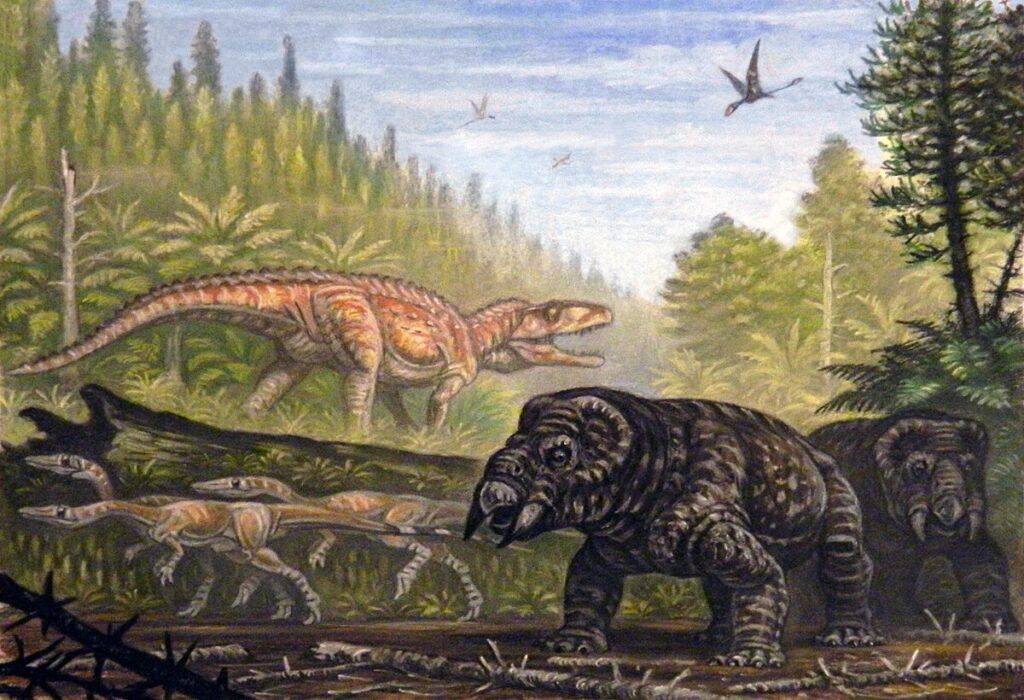
 Postosuchus, Coelophysis, and Placerias by ABelov2014 is licensed under CC BY-SA 3.0.
Dinosaurs also lived alongside a wide range of crocodile-like archosaurs, many of which were larger and more imposing than the early dinosaurs. It was a time of experimentation in evolution, with various groups competing for dominance in the aftermath of a global ecological collapse.
In the story of animal evolution on Earth, archosaurs6: Go to reference 6 at the end of the page are a fascinating and crucial group. It’s a bit counterintuitive but modern crocodilians (crocodiles, alligators, and gharials) are more closely related to birds than to lizards, snakes, or other reptiles. This is because both birds and crocodiles descend from a shared archosaur ancestor.
All archosaurs fall into one of two major branches:
Avemetatarsalians7: Go to reference 7 at the end of the page
All archosaurs more closely related to modern birds. It contains dinosaurs, pterosaurs, and their early relatives.
Pseudosuchians8: Go to reference 8 at the end of the page
All archosaurs more closely related to modern crocodiles. It contains ancient forms like rauisuchians, aetosaurs, and crocodylomorphs.
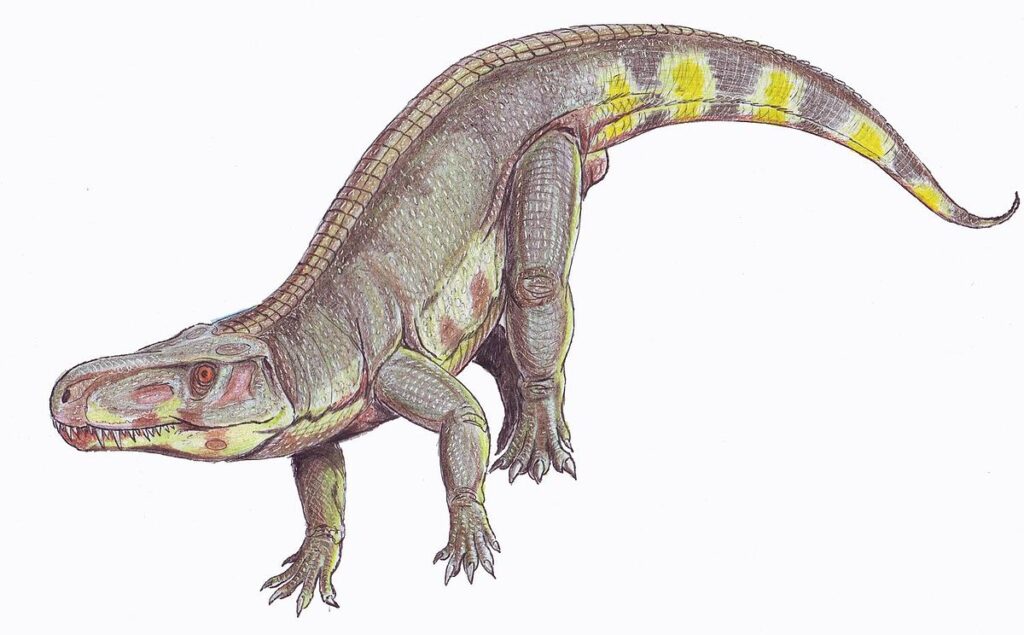 Batrachotomus by Dmitry Bogdanov is licensed under CC BY-SA 3.0.
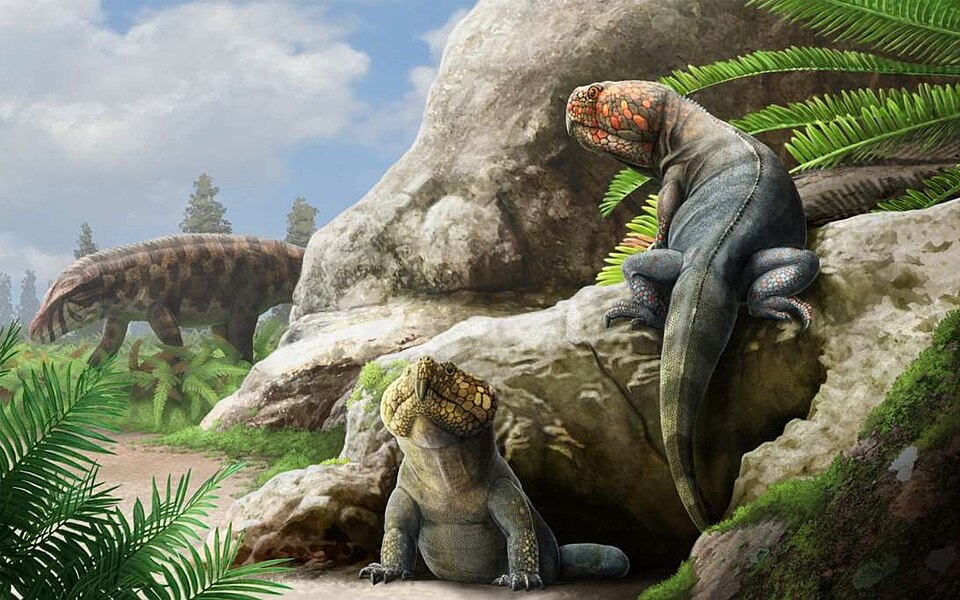 Beesiiwo cooowuse by Gabriel N. Ugueto is licensed under CC BY-SA 4.0.
Dinosaurs and pterosaurs, both avemetatarsalians, usually get all the attention, so I thought I would shine a light on the underappreciated bad boys of the Triassic, the pseudosuchians. Crocodiles and alligators may differ in a few ways, but they share a lifestyle as semi-aquatic predators lurking just beneath the surface, waiting to ambush the unwary.9: Go to reference 9 at the end of the page It’s easy to assume their ancestors all lived like this too, but that couldn’t be further from the truth.
The Triassic relatives of crocodiles were very diverse. Some walked tall on land with upright limbs, galloping like horses and hunting like wolves. Others were heavily armoured, bizarrely shaped, or even equipped with hoof-like toes. A few left the land entirely, adapting to life in the open ocean.


The Rauisuchians
Before dinosaurs took over, it was the rauisuchians10: Go to reference 10 at the end of the page ruled the land as apex carnivores of the Triassic. These towering reptilian predators belonged to the crocodile side of the archosaur family tree, but they looked nothing like the low slung lurkers we associate with modern crocodilians. Their legs were positioned directly beneath their bodies, allowing them to stand tall and move with surprising power and agility. Many were quadrupedal, while some, such as members of the poposauroid group, may have been able to rise onto two legs when moving quickly or striking.11: Go to reference 11 at the end of the page
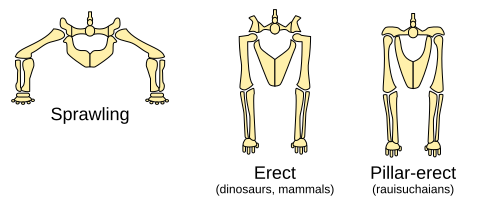 Sprawling and erect hip joints by Fred the Oyster is licensed under CC BY-SA 4.0.
They were built for strength, with long tails for balance and broad, barrel shaped chests that supported strong limb muscles. While most rauisuchians likely hunted using ambush tactics, some species, including Rauisuchus, may have been capable of chasing prey in short bursts, much like a lion or a wolf.12: Go to reference 12 at the end of the page
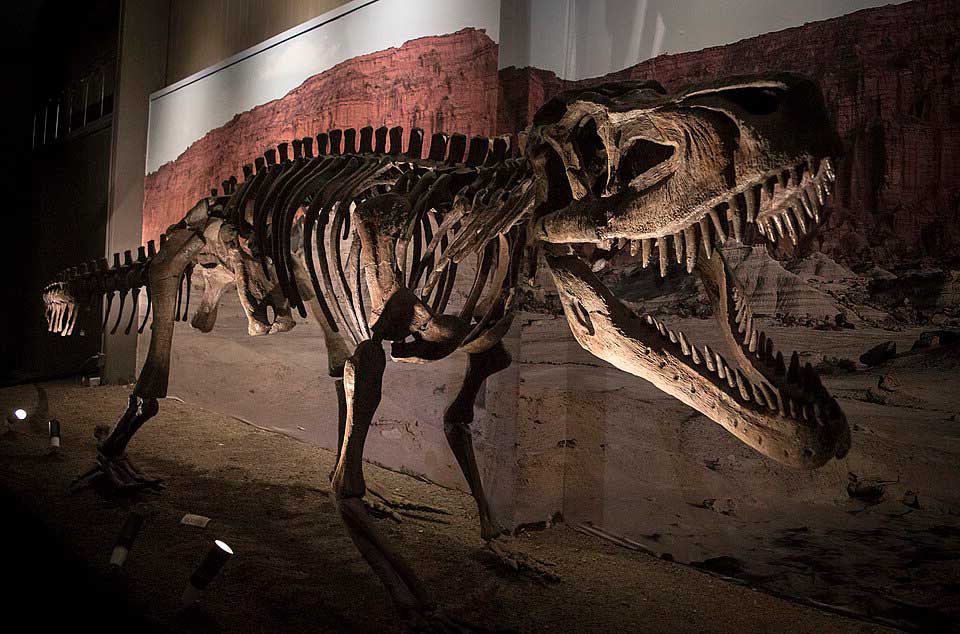 Ichigualasto by Agus Palcze is licensed under CC BY 3.0.
Their body plans varied, but they shared a talent for taking down whatever got in their way. Some had narrow snouts for quick strikes, while others had broader jaws for crushing prey. Their eyes faced forward, giving them better depth perception than many of their contemporaries. Fossil beds of Decuriasuchus containing multiple individuals suggest some species may have lived or moved in groups, possibly using coordinated attacks.13: Go to reference 13 at the end of the page
Rauisuchians were not just large, they were specialised for dominance. They had massive skulls lined with slicing teeth, muscular limbs, and in some species, rows of armour like plates along their backs. Unlike the early dinosaurs of their time, most rauisuchians were already highly effective predators, occupying the top of the food chain across the Triassic world.
Postosuchus14: Go to reference 14 at the end of the page is probably the best-known rauisuchian. It lived in what is now the southern United States and could grow over four metres long. With a deep, heavy skull full of sharp, curved teeth, it likely delivered powerful, bone-crushing bites. Its forelimbs were much shorter than its hindlimbs, which led some scientists to propose it walked on two legs at times . It had a robust build, a long tail for balance, and a design suited for ambushing prey with brute strength .15: Go to reference 15 at the end of the page
Fossils show reinforced vertebrae and strong muscle attachments along the hips and tail, suggesting it could perform explosive bursts of movement.16: Go to reference 16 at the end of the page Its sharp claws helped grip struggling prey. Though not built for sustained speed, its strength and capacity for surprise allowed it to dominate as a predator capable of taking down large herbivores or scavenging when opportunities arose .
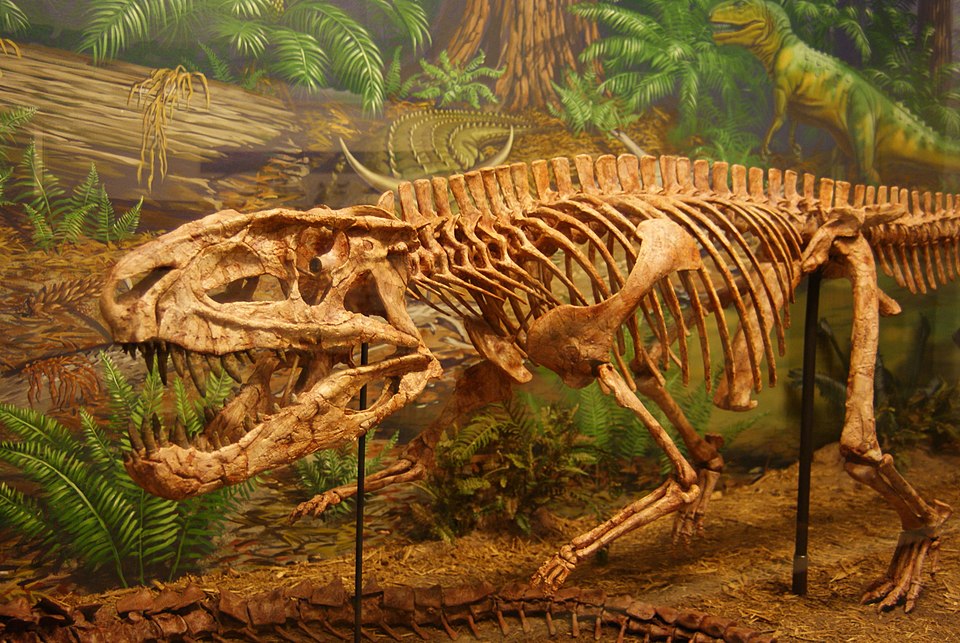 Postosuchus by Dallas Krentzel is licensed under CC BY 2.0.
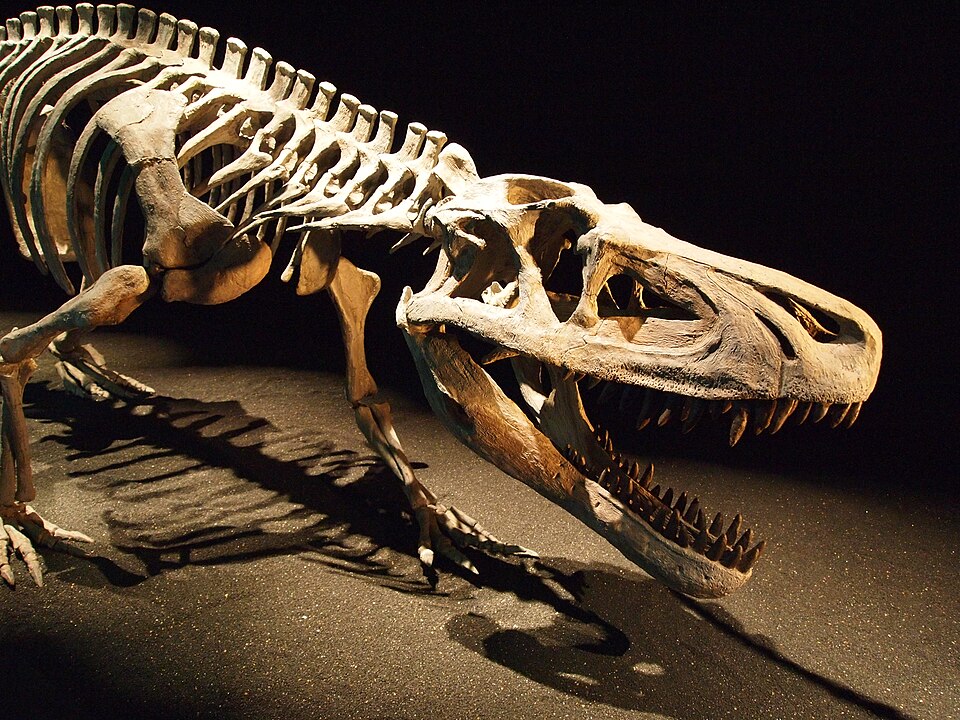 Saurosuchus by Kentaro Ohno is licensed under CC BY 2.0.
Found in Late Triassic Argentina, Saurosuchus19: Go to reference 19 at the end of the page was an even stockier predator than its relatives. It had a large, broad skull and a powerful neck, supported by robust limbs built for carrying a heavy body. At six to seven metres long, it would have towered over most contemporary dinosaurs.20: Go to reference 20 at the end of the page Fossils show two rows of leaf-shaped bony scutes running down its back, suggesting a thick, possibly reinforced hide for protection
Its low, stable frame and strong jaws suggest an animal relying on brute strength rather than speed as its primary hunting tactic.21: Go to reference 21 at the end of the page Saurosuchus likely ambushed prey by waiting near waterholes or game trails, then delivering a sudden, crushing strike. It would have been the top predator in its ecosystem, competing with other carnivores and probably targeting early sauropodomorphs22: Go to reference 22 at the end of the page and other large herbivores.
Also from South America, Prestosuchus23: Go to reference 23 at the end of the page adds more depth to the rauisuchian narrative. It had a somewhat lighter frame than Saurosuchus but remained a formidable predator. Its wide, deep chest and powerful hindlimbs suggest it hunted with more mobility and perhaps a more active style. Its skull was large and deep with strong jaws designed for gripping and tearing flesh.24: Go to reference 24 at the end of the page Prestosuchus grew up to 6–7 metres long and represented one of the largest rauisuchians. Fossils include multiple individuals from the same site that represent different stages of growth . These discoveries provide valuable insights into its growth and development, indicating that Prestosuchus thrived across several generations in its ecosystem.25: Go to reference 25 at the end of the page
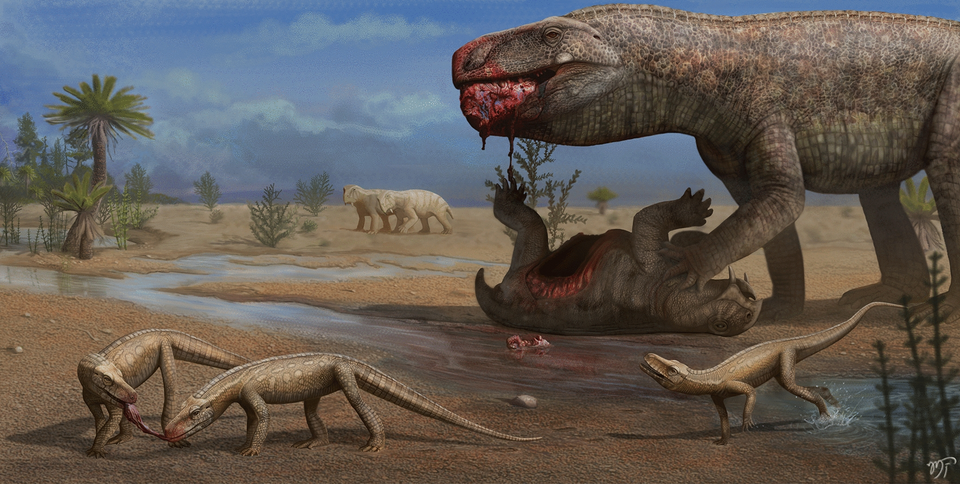 Prestosuchus & Parvosuchus by Matheus Fernandes is licensed under CC BY 4.0.
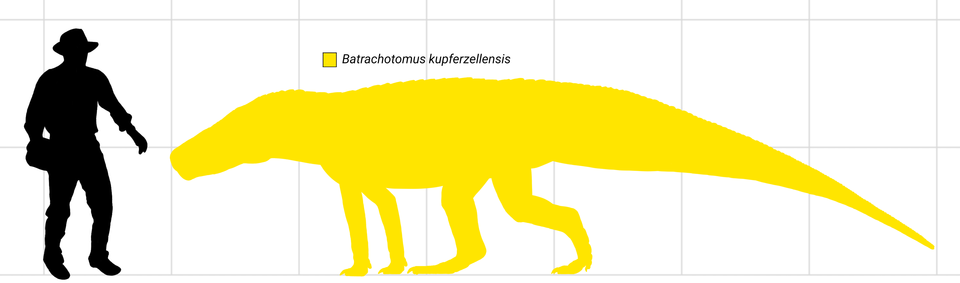 Batrachotomus scale diagram by Gallimimus wikipedista is licensed under CC BY-SA 4.0.
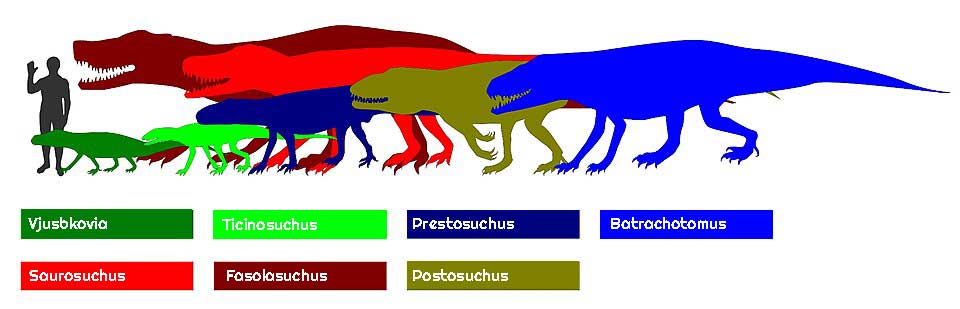 Rauisuchidae by Ornitholestes is in the public domain.
Text description of image
A size comparison chart showing several Triassic rauisuchians alongside a human silhouette for scale. The animals are colour-coded and arranged from smallest to largest. On the far left is Vjushkovia in dark green, followed by the slightly larger Ticinosuchus in bright green. Next is Prestosuchus in blue, Batrachotomus in dark blue, Saurosuchus in red, Fasolasuchus in dark red, and finally Postosuchus in olive green.
All are large, predatory pseudosuchians with upright limbs and massive skulls. The human figure stands near the left for comparison. A key beneath the silhouettes identifies each species by name and colour.
Discovered in Germany, Batrachotomus26: Go to reference 26 at the end of the page represents the rauisuchians that once lived in Europe. It had a narrower skull than some of its relatives and long limbs that may have made it relatively agile for its size. One of its most striking features was the presence of paired rows of bony plates, called osteoderms, that ran along its back. These may have served as defence against other large predators or functioned as display structures. It lived near swampy floodplains and likely shared its environment with large amphibians such as Mastodonsaurus, which is reflected in its name, meaning “frog cutter”.27: Go to reference 27 at the end of the page
Rauisuchians were fierce, upright predators that ruled the land well before the age of dinosaurs. With their powerful builds and diverse features, they reveal just how strange and varied early crocodile relatives could be. And they were only the beginning.
The Aetosaurs & Ornithosuchids
The Aetosaurs
Starting with the rauisuchians was easy. Even though they moved with upright, pillar-like limbs and stood taller than any crocodile today, they were still big-headed reptiles with slicing teeth and powerful jaws, the kind of animal you could easily picture as a prehistoric cousin to crocodiles or alligators.
But aetosaurs28: Go to reference 28 at the end of the page are a very different story. These squat, tank-like reptiles flipped the crocodile playbook on its head. Instead of hunting prey with teeth and speed, they trudged through ancient floodplains in search of plants, roots, and tubers. Their bodies were covered in rows of bony armour, and their upturned snouts were built for digging rather than biting. Far from being fearsome predators, aetosaurs were among the Triassic’s most heavily protected herbivores.
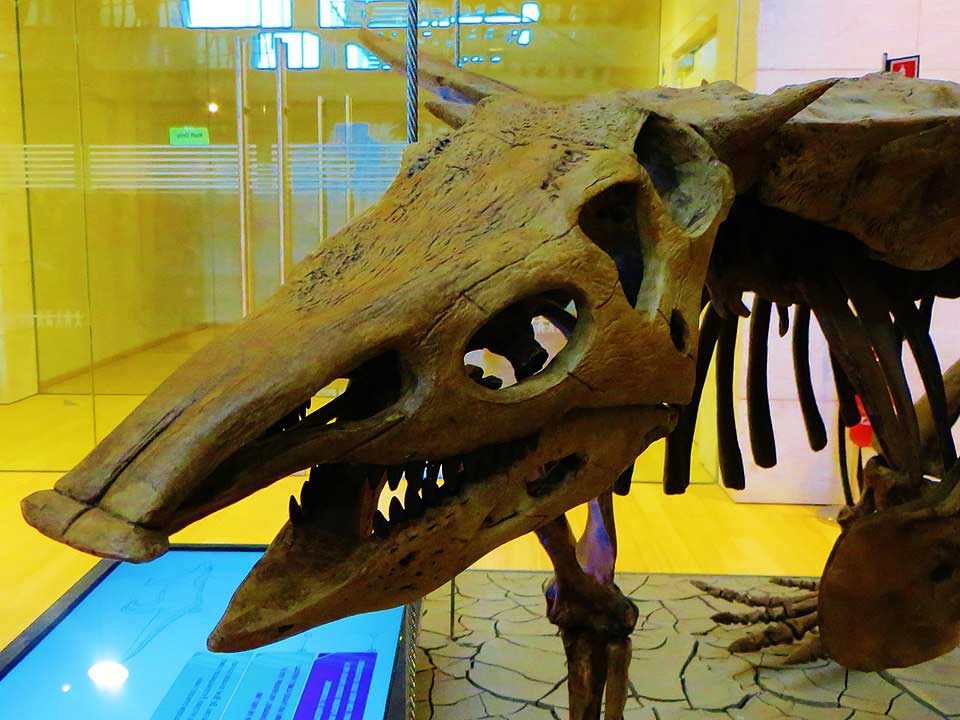 Desmatosuchus by Ghedoghedo is licensed under CC BY-SA 3.0.
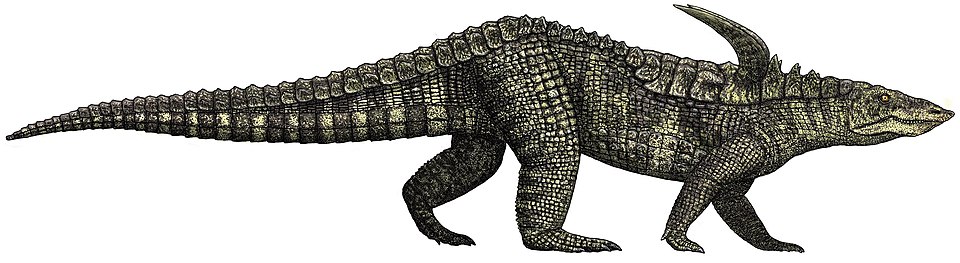 Desmatosuchus spurensis by Petrified Forest is licensed under CC BY 2.0.
Among the many armoured reptiles of the Triassic, desmatosuchus29: Go to reference 29 at the end of the page is likely the most recognisable aetosaur. Its low, tank-like body was protected by rows of thick bony plates, with enormous spikes projecting from its shoulders.(🤘 so metal) These features have made it a favourite in museum displays30: Go to reference 30 at the end of the page and books, often used to represent the group.
Despite its fierce appearance, desmatosuchus was actually a slow-moving herbivore. Its shovel-like, upturned snout, resembling a pig’s, was ideal for rooting through soil and leaf litter in search of roots, tubers, and other low-growing vegetation. The strong forelimbs and broad, shovel-shaped skull supported this foraging behaviour and were well suited for digging.
Its heavy armour, made of rows of bony plates and long shoulder spikes, served as protection against predators such as rauisuchians like postosuchus. These features may also have played a role in mating displays or territorial behaviour, as variations in spike size among specimens suggest.
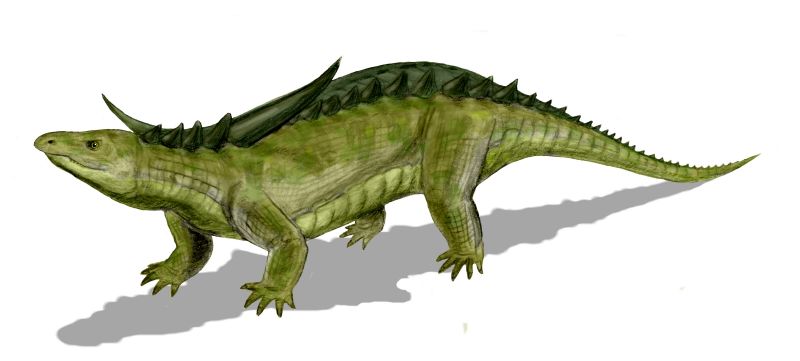 Desmatosuchus BW by Nobu Tamura is licensed under CC BY-SA 3.0.
Rather than relying on speed, desmatosuchus depended on its defensive adaptations. Fossil remains have been found across Late Triassic formations in North America, suggesting it thrived in its environment and may have lived in groups. Its distinctive skeleton, including prominent armour and shoulder spikes, makes it one of the most recognisable aetosaurs of the Triassic.
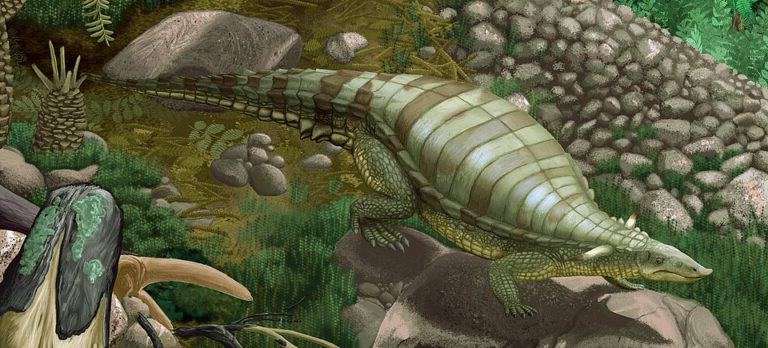 Desmatosuchus BW by Smokeybjb is licensed under CC BY-SA 3.0.
Typothorax31: Go to reference 31 at the end of the page is one of the most visually distinct aetosaurs, known for its extremely wide, flat body and broad, plate‑like armour. It walked low to the ground with short legs and a wide stance, giving it an almost turtle‑like appearance.
The back and sides were covered in thick, rectangular scutes that provided strong protection, and its tail was long and heavy. Typothorax lived in what is now North America and was likely a slow but sturdy browser, feeding on soft vegetation along riverbanks.
Aetosaurus32: Go to reference 32 at the end of the page is one of the earliest and smallest known aetosaurs. Unlike bulkier forms such as desmatosuchus, it had a more slender body and less elaborate armour, suggesting greater agility. Fossils have been found in Europe and North America, dating to the Late Triassic, making it an important species for understanding early aetosaur evolution. Its simple body plan, narrow snout, and light build suggest it was a ground‑feeding herbivore.
A 2023 study based on fossils from Kaltental, near Stuttgart, Germany, suggests that juvenile Aetosaurus ferratus were likely gregarious, possibly forming groups to improve their chances of survival and reduce the risk of predation.33: Go to reference 33 at the end of the page
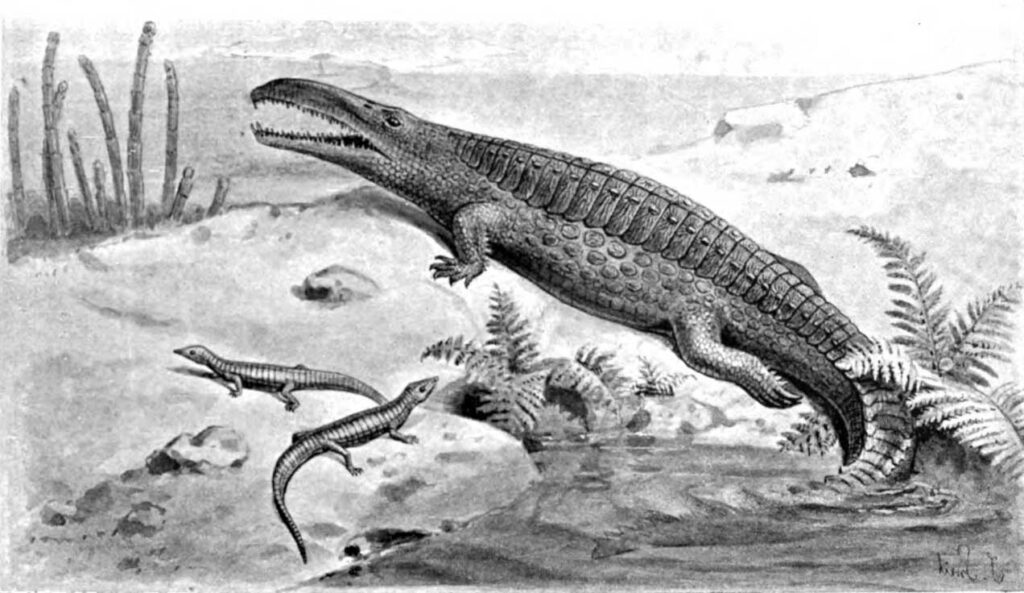 Belodon by Joseph Smit is in the public domain.
The Ornithosuchids
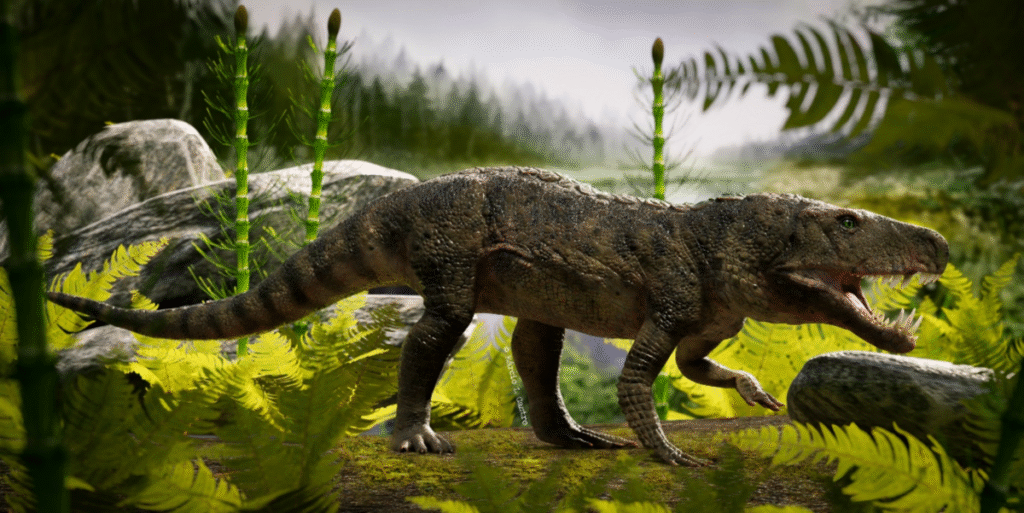 Dynamosuchus Castro life restoration by Márcio L. Castro is licensed under CC BY 4.0.
If aetosaurs represented the tank-like herbivores of the crocodile lineage, then ornithosuchids34: Go to reference 34 at the end of the page were something… a bit stranger. These reptiles had the sharp teeth, long tails, and upright postures you might expect from an early theropod dinosaur, but they belonged to the crocodile side of the archosaur family tree. With upturned snouts and strong hindlimbs, they stood out in any Triassic ecosystem, not quite predators in the traditional sense, but certainly not gentle plant-eaters either.
What makes ornithosuchids so intriguing is their mix of familiar and unfamiliar traits. They likely walked on all fours most of the time but could sprint on two legs when needed. Their jaws suggest they were scavengers or opportunistic hunters, perhaps filling a niche somewhere between crocodiles and carnivorous dinosaurs.
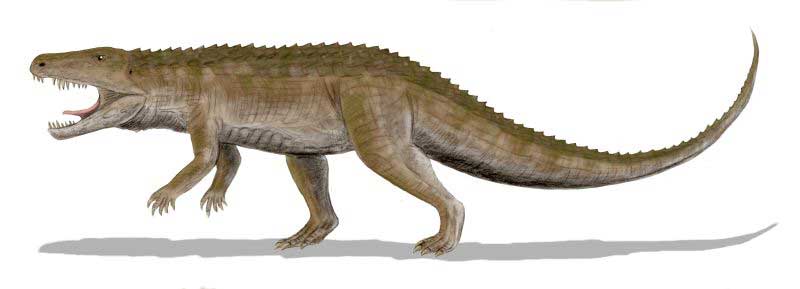 Ornithosuchus by Nobu Tamura is licensed under CC BY-SA 3.0.
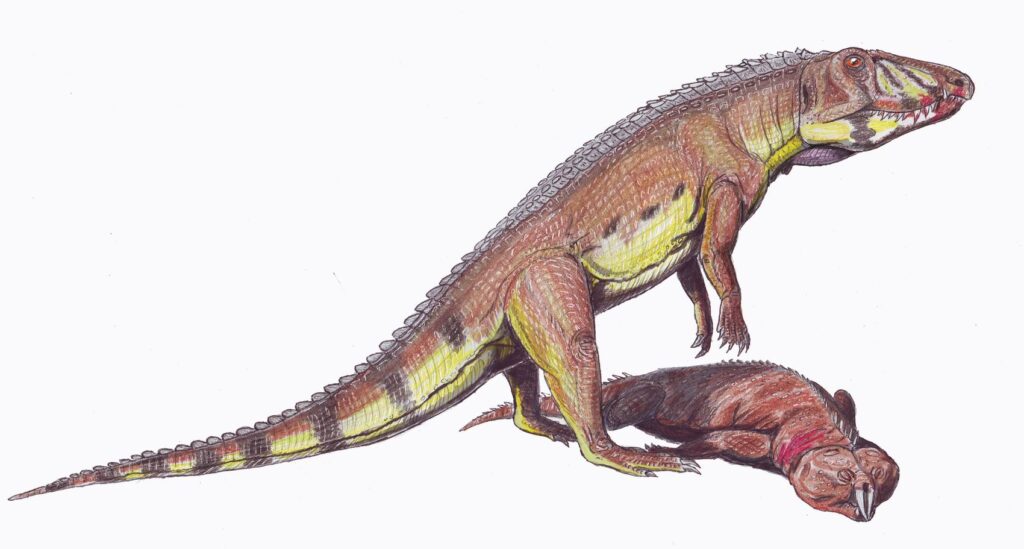 Ornithosuchus by Dmitry Bogdanov is licensed under CC BY-SA 2.5.
Ornithosuchus35: Go to reference 35 at the end of the page is the best-known member of the group and the one that gave ornithosuchids their name. Found in the Lossiemouth Sandstone,36: Go to reference 36 at the end of the page which are Late Triassic rocks in Scotland, it reached about two metres in length and had a sleek, agile body. Its upturned snout and sharp, serrated teeth suggest it may have been a scavenger, feeding on carcasses left behind by other predators.
Early on, it was mistaken for a dinosaur due to its build and posture, but closer study of its ankle and skull structure confirmed it belonged firmly on the crocodile side of the archosaur family tree.
Riojasuchus37: Go to reference 37 at the end of the page is represented by well-preserved fossils from the Los Colorados Formation38: Go to reference 38 at the end of the page in La Rioja, Argentina, dating to the Late Triassic (roughly 217 mya to 215 mya). Slightly larger and more robust than its relative Ornithosuchus, it featured a deep, triangular skull with a distinctive upturned snout, strong limbs, and recurved teeth. Multiple specimens representing different growth stages provide valuable insight into its ontogeny.39: Go to reference 39 at the end of the page
With its solid build and recurved dentition, Riojasuchus likely occupied the ecological role of an opportunistic predator or scavenger in Triassic South America. While earlier studies favored a scavenging lifestyle based on its serrated teeth and bite mechanics, a 2023 biomechanical analysis40: Go to reference 40 at the end of the page suggested cranial strengths better suited to resisting torsional stress rather than slicing meat, hinting at a more generalized feeding strategy, possibly including piscivory, though scavenging remains plausible.
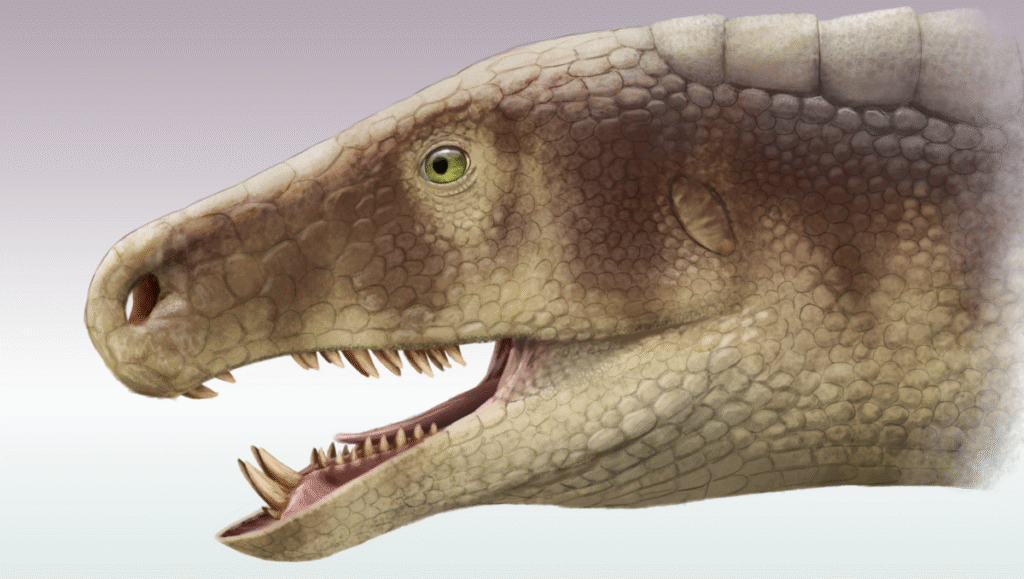 Riojasuchus life reconstruction by LiterallyMiguel is licensed under CC BY 4.0.
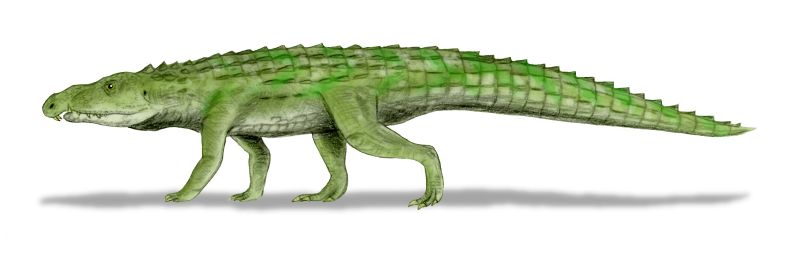 Riojasuchus by Nobu Tamura is licensed under CC BY 3.0.
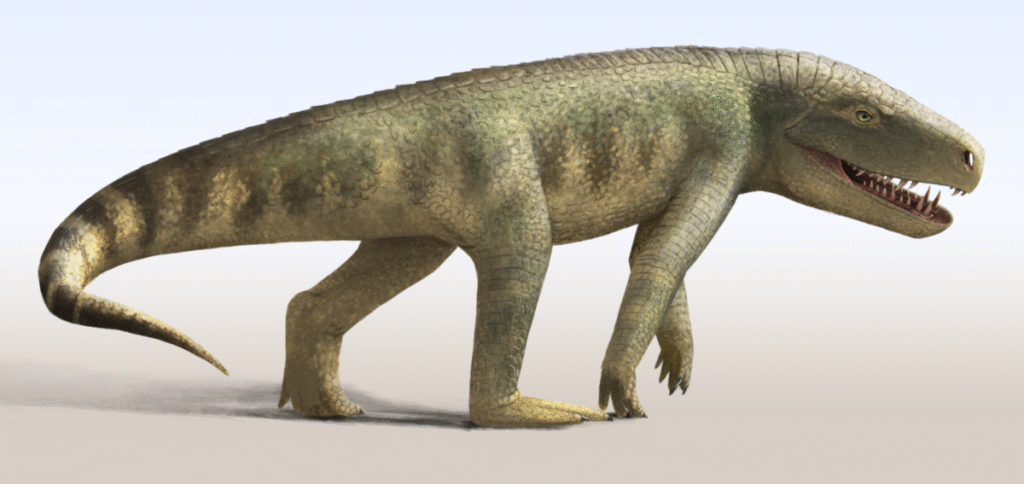 Venaticosuchus life reconstruction by LiterallyMiguel is licensed under CC BY 4.0.
Also discovered in Argentina, another member of the ornithosuchid family is Venaticosuchus.41: Go to reference 41 at the end of the page Although its remains are fragmentary, the preserved portions of the skull show clear anatomical similarities to other ornithosuchids. Despite its name, which means “hunting crocodile,” it may have been more of a scavenger than an active predator.
While less is known about its full body shape and lifestyle, it adds to the growing picture of ornithosuchid diversity in the southern continents.
The Crocodylomorphs
🎵I’ve got another confession to make🎵 The motivation behind this blog post was to get to this point, so I could talk about crocodylomorphs.42: Go to reference 42 at the end of the page I love them that much. After marching through towering rauisuchians and digging into the strange lives of aetosaurs and ornithosuchids, we finally arrive at the group that would give rise to today’s crocodiles and alligators. But their story is far more interesting than most people realise. Even as a small subgroup of the pseudosuchians, the Crocodylomorphs were incredibly varied in size and shape.
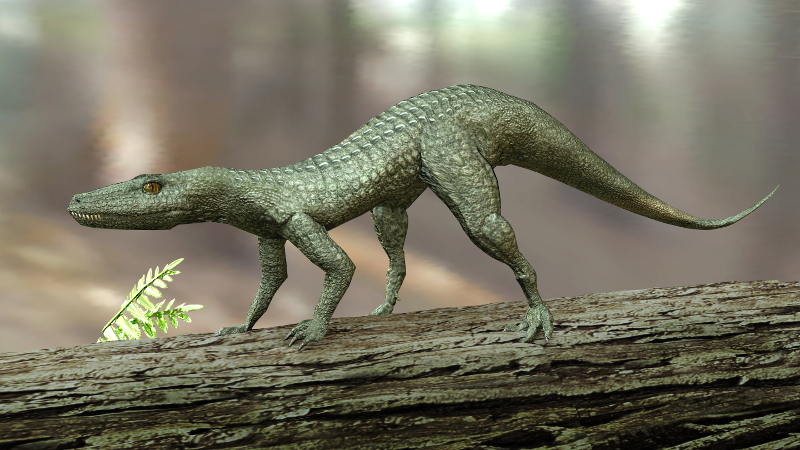 Crocodylomorph by AuntSpray is licensed under CC BY-SA 3.0.
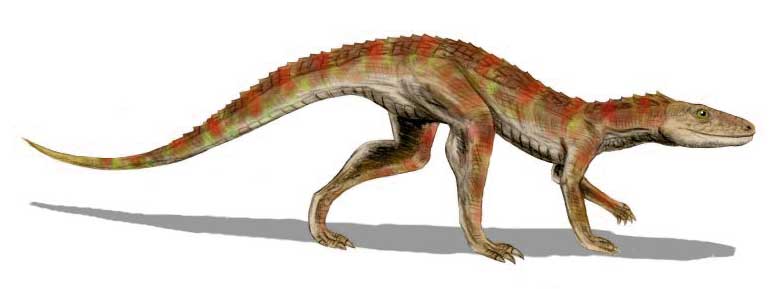 Hesperosuchus by Nobu Tamura is licensed under CC BY-SA 3.0.
Crocodylomorphs first emerged in the Late Triassic, not as massive predators but as small, nimble reptiles adapted for life on land. Early species like hesperosuchus43: Go to reference 43 at the end of the page had long limbs, narrow skulls, and lightweight builds, may have fed on small vertebrates as they darted through underbrush beneath the shadows of larger predators like the rauisuchians. Rather than dominating by force, they thrived through agility, speed, and ecological flexibility.
Over time, this versatile group branched into a wide range of forms. Some adapted to life in the water, evolving into sleek, fish-eating marine hunters. Others settled along rivers and floodplains, gradually developing the powerful jaws, flattened bodies, and stealthy ambush tactics we now associate with crocodiles.
While nearly every other crocodile-line reptile vanished by the end of the Mesozoic, crocodylomorphs endured. By the Late Cretaceous, they were the only surviving pseudosuchians, and remarkably, they persisted through the cataclysmic K-Pg extinction that wiped out the non-avian dinosaurs.
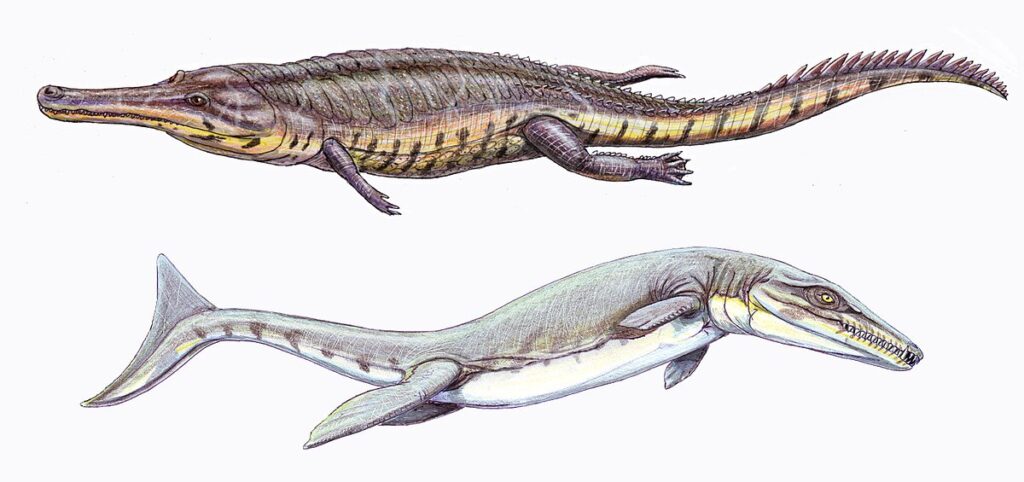 Thalattosuchia morphotypes by DiBgd; Mark T. Young, Stephen L. Brusatte, Marco Brandalise de Andrade, Julia B. Desojo, Brian L. Beatty, Lorna Steel, Marta S. Fernández, Manabu Sakamoto, Jose Ignacio Ruiz-Omeñaca, Rainer R. Schoch is licensed under CC BY-SA 4.0.
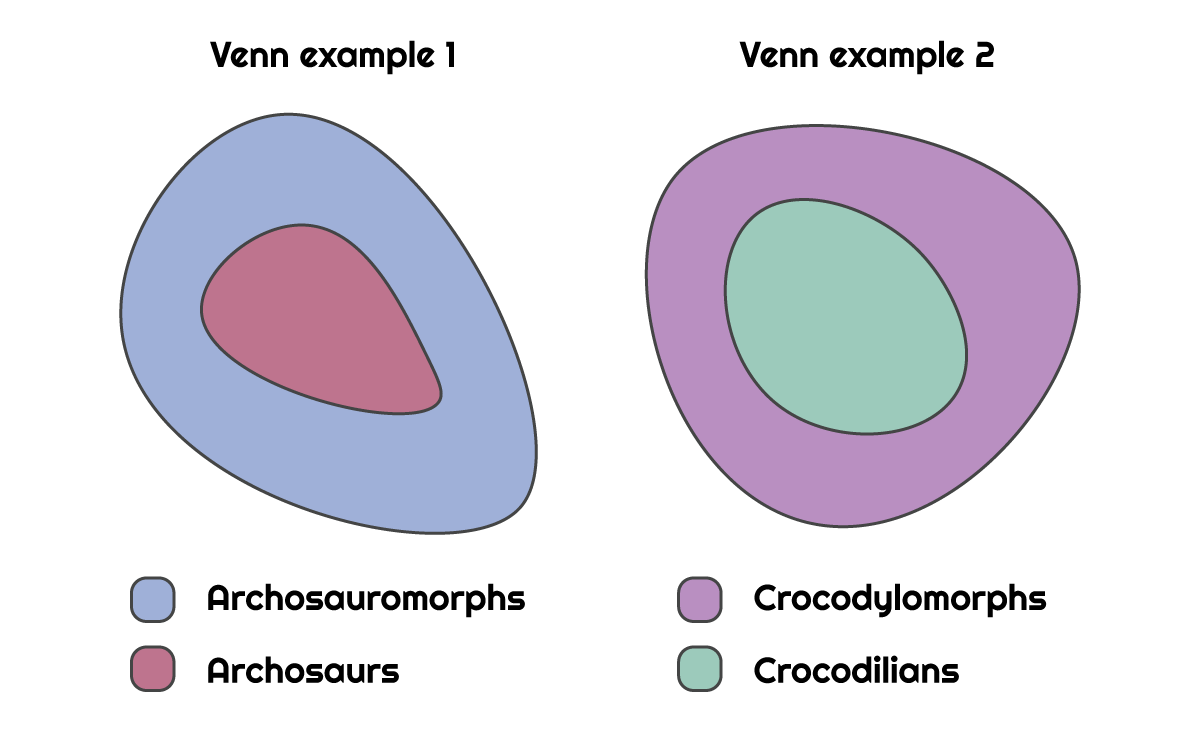
When used in taxonomy, the ending “morph” (Greek for form or shape) usually refers to a broad group of animals that share a common body plan or evolutionary origin.44: Go to reference 44 at the end of the page
For example, archosauromorpha (Greek for ruling lizard forms) is a clade of diapsid reptiles that includes all species more closely related to archosaurs (such as crocodilians and dinosaurs, including birds) than to lepidosaurs (resptiles such as tuataras, lizards, and snakes).
An archosaur is always an archosauromorph, but an archosauromorph isn’t always an archosaur.
Let’s start with the thalattosuchians45: Go to reference 45 at the end of the page because I love them and mention them way too often IRL, especially the metriorhynchids.46: Go to reference 46 at the end of the page But the idea of a fully aquatic crocodile seems both rad and scary to me. Just imagine what a mid-ocean fight between a shark and marine croc would look like. Winner takes on an Orca!
These ancient crocodylomorphs lived during the Jurassic and early Cretaceous, and they weren’t just crocodiles that liked to swim, they were fully adapted for life in the ocean. Some had streamlined bodies, flippers instead of limbs, and even tail fins like a shark’s. Picture a crocodile crossed with a mosasaur,47: Go to reference 47 at the end of the page and you’re not far off. Now that’s a Lake Placid sequel I want to see.
For more on the marine crocodile who embraced life in the salty seas, take a reading break and check out the following video from Moth Light Media’s YouTube channel.
 When Crocodiles Swam the Ocean by Moth Light Media.
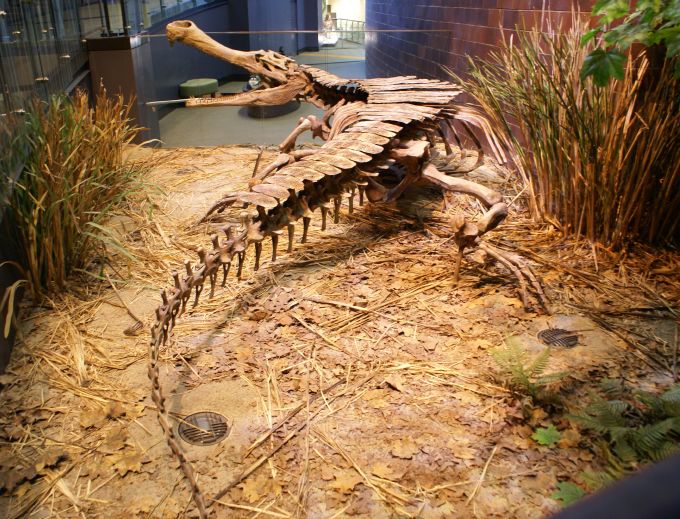 Super Croc by Valerie Everett is licensed under CC BY-SA 2.0.
And of course, there is sarcosuchus,48: Go to reference 48 at the end of the page often called the SuperCroc. Living during the Early Cretaceous in what is now Africa, this massive crocodyliform could grow up to 10 metres long and weigh between 3 and 5 tonnes, easily rivalling the largest theropod dinosaurs of its time.
It had a long, broad snout filled with over 100 teeth, and a rounded bony structure at the tip known as a bulla, which may have amplified sound or supported a fleshy display.49: Go to reference 49 at the end of the page Although it was not a true crocodylian, the group that includes modern crocodiles and alligators, it was closely related and likely hunted both aquatic and land-based prey along river systems. Picture a crocodile the size of a city bus, and you have the right mental image.
Notosuchians50: Go to reference 50 at the end of the page were land-dwelling crocodylomorphs that looked nothing like modern crocodiles. Many were small, nimble, and surprisingly diverse, adapted to a range of ecological roles. Some, like armadillosuchus,51: Go to reference 51 at the end of the page had armour plates along their backs and may have been capable of digging, possibly to escape predators or forage for food. Others, such as simosuchus,52: Go to reference 52 at the end of the page had short, boxy skulls, tiny teeth, and may have been herbivorous. Its squat body and almost comical appearance make it one of the strangest members of the entire croc lineage.
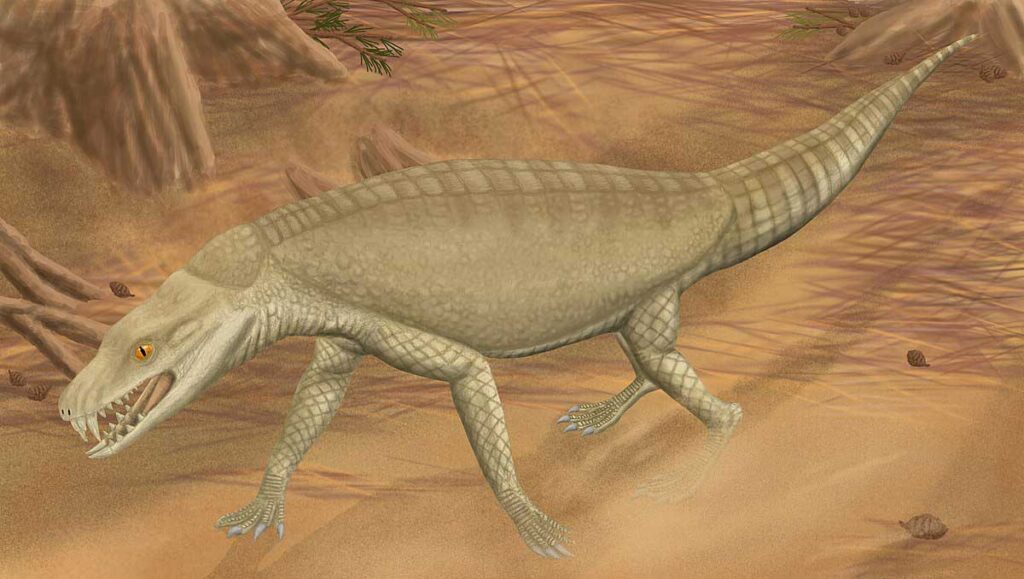 Armadillosuchus by Smokeybjb is licensed under CC BY-SA 3.0.
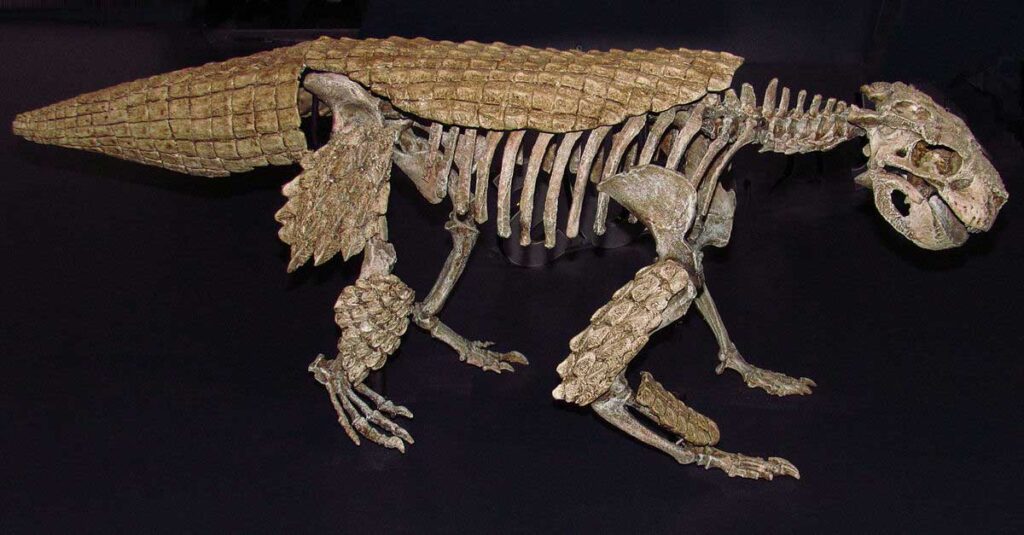 Simosuchus clarki, ROM by D. Gordon E. Robertson is licensed under CC BY-SA 3.0.
What makes notosuchians so interesting is how far they strayed from the classic crocodile template. They were experimenting with different diets, limb proportions, and lifestyles, thriving across Gondwana during the Cretaceous.
While modern crocs tend to stick to the water’s edge, notosuchians were out in the open, filling niches more often occupied by mammals or dinosaurs. They show just how flexible and inventive crocodylomorph evolution could be.
I can’t write a prehistoric crocodile post without at least mentioning the phytosaurs.53: Go to reference 53 at the end of the page
Phytosaurs are not pseudosuchians, or even true archosaurs, so technically they don’t belong in this post. But they are archosauromorphs, which means they are not too far removed from crocodile-line reptiles on the evolutionary tree. And when you get a look at them, I think you will understand why I wanted to include them.
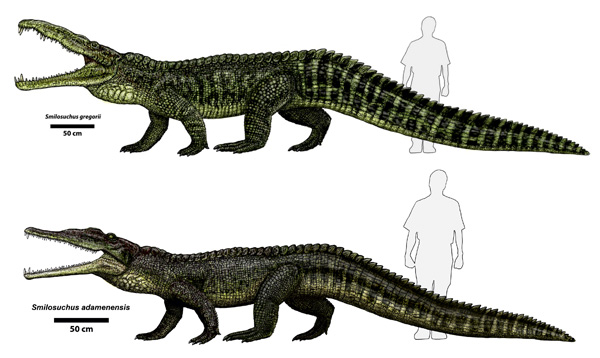
Illustration of two Smilosuchus species, illustrating brachyrostral and dolichorostral snout types Smilosuchus by Dr. Jeff Martz/NPS is in the public domain.
With their long snouts, conical teeth, and sprawling posture, they looked so much like crocodiles that early palaeontologists thought they were close relatives. In reality, they are a classic example of convergent evolution,54: Go to reference 54 at the end of the page where unrelated animals evolve similar features to fill the same roles.
One of the most fearsome was Smilosuchus,55: Go to reference 55 at the end of the page a Triassic predator with a broad skull, massive jaws, and long fang-like teeth that probably helped it take down large prey. It could reach lengths over nine metres, making it one of the largest predators of its time, and a serious threat to anything unlucky enough to share its river system.
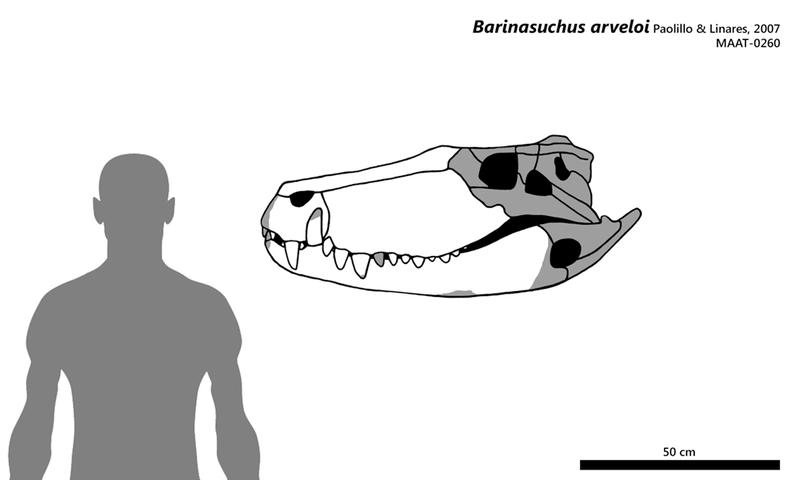 Barinasuchus arveloi by bLAZZE92 is licensed under CC BY 3.0.
After the K–Pg extinction56: Go to reference 56 at the end of the page wiped out the non-avian dinosaurs, some crocodylomorphs stepped up to fill vacant predator roles. Among the most notable were the sebecosuchians,57: Go to reference 57 at the end of the page a group of land-dwelling crocs with deep skulls, serrated teeth, and powerful jaws. Unlike their semi-aquatic relatives, these were fully terrestrial hunters that roamed South America, parts of Europe, North Africa, Madagascar, and the Indian subcontinent.
Sebecus58: Go to reference 58 at the end of the page and later giants like barinasuchus59: Go to reference 59 at the end of the page could grow several metres long and may have been among the top predators in their ecosystems, at least until placental mammals began to dominate. It’s a striking reminder that crocodile relatives did not just survive the extinction, they adapted and even took the spotlight, if only for a while.
Boverisuchus60: Go to reference 60 at the end of the page lived during the Eocene epoch (roughly 56 mya to 34 mya), long after the extinction of the dinosaurs, and represents a phase when some crocodylomorphs began evolving back into powerful, semi-aquatic ambush predators, a shift that echoes the lifestyle of modern crocodiles. Boverisuchus and some of its close relatives within the sebecosuchian group had hoof-like toes, or more specifically, unguals61: Go to reference 61 at the end of the page shaped like hooves rather than claws.
For more on the hooved crocodile who ran on hooves, check out the video “The Croc That Ran on Hooves” from PBS’ Eons YouTube channel.
The Croc That Ran on Hooves by PBS Eons.The Crocodilians
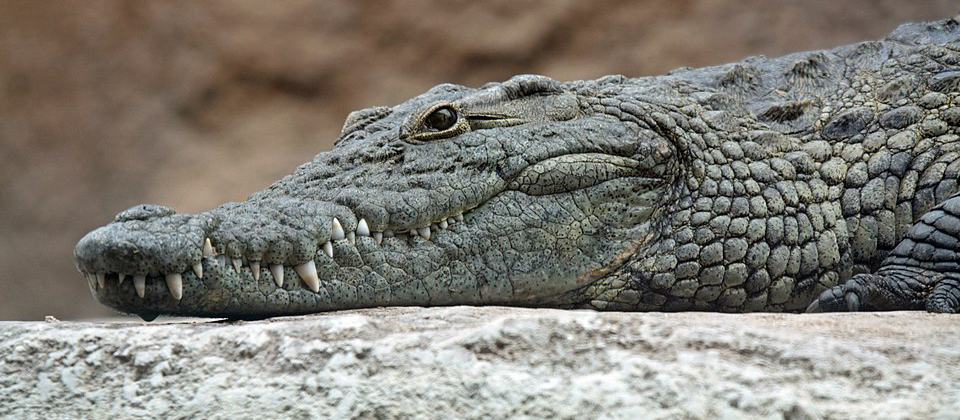 Nile Crocodile Head by Leigh Bedford is licensed under CC BY 2.0.
The modern lineage of crocodilians began in the Late Cretaceous, around 95 million years ago. This crown group, known as crocodilia,62: Go to reference 62 at the end of the page includes all living crocodiles, alligators, caimans, and gharials. They descended from a branch of advanced crocodyliforms called eusuchians,63: Go to reference 63 at the end of the page which had already developed many traits associated with crocodilians today, such as a secondary palate and heavily armoured skin.
By the Late Cretaceous, roughly 80 to 90 million years ago, the three major crocodilian families were already on separate evolutionary paths. Gharials had diverged first, followed by the split between the ancestors of crocodiles and alligators. These early crocodilians were already developing recognisable features, with some showing striking specialisations. Fossils of eocaiman64: Go to reference 64 at the end of the page from South America represent an early branch of the alligator lineage, while thoracosaurus,65: Go to reference 65 at the end of the page found in both North America and Europe, had a long, narrow snout well suited for catching fish, much like today’s gharials.
Thoracosaurus: One Of Largest Survivors From The K–Pg Extinction Event by CHimerasuchus.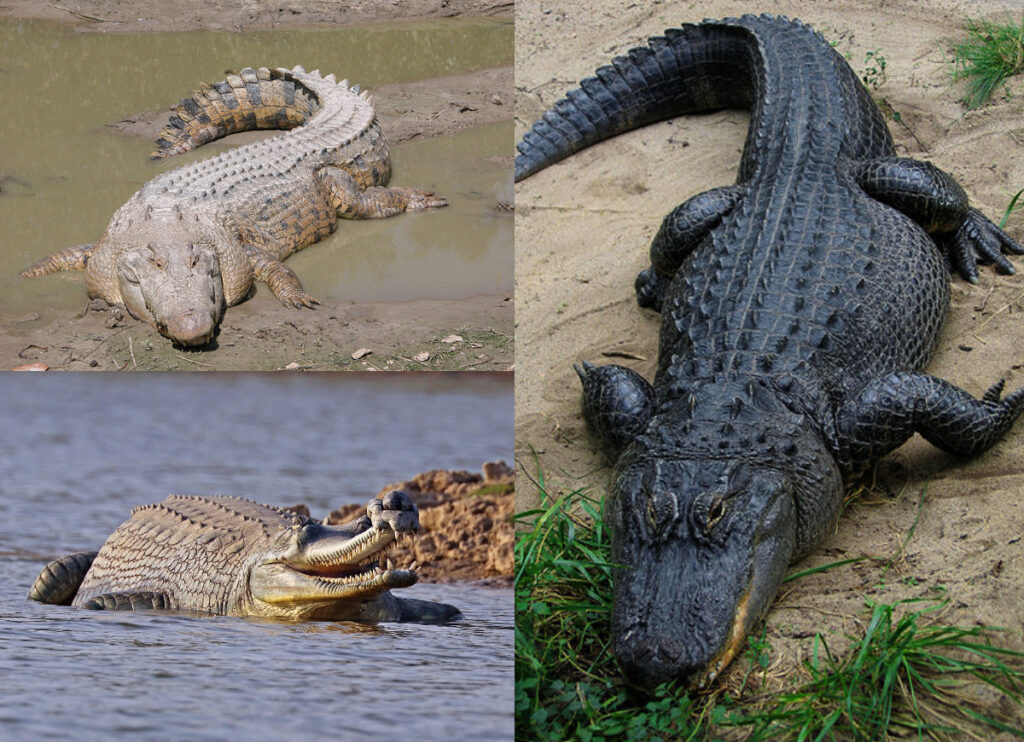 Crocodilia montage by LittleJerry, Molly Ebersold, Postdlf, and Charles J. Sharp is licensed under CC BY-SA 4.0.
Crocodilians have remained relatively unchanged for around 80–95 million years, tracing back to when the crown group crocodilia first appeared in the Late Cretaceous. Modern species are highly specialised predators with powerful jaws, acute senses, four-chambered hearts, and unidirectional airflow in their lungs, adaptations that support life in both water and on land.66: Go to reference 66 at the end of the page
They exhibit notable behavioural complexity, including vocal communication, social interactions, and parental care. Crocodilians begin vocalising within their eggs to synchronise hatching and to alert their mother . Hatchlings continue to call, prompting mothers to excavate nests, transport young to water, and sometimes stay with them for months or even years. They also use a wide range of sounds, chirps, bellows, growls, for social signalling, defence, and courtship.67: Go to reference 67 at the end of the page These traits, along with their durable anatomy, have enabled crocodilians to survive through eons, remaining largely unchanged while thriving in rivers, swamps, and wetlands around the globe.
In conclusion
Modern crocodilians are impressive survivors, but they represent only the latest chapter in a much deeper history. Along their evolutionary family tree, a wide range of crocodile relatives evolved. Some had hooves, some were built for speed, and others adapted to life in the sea. The incredible variety of these ancient pseudosuchians shows that crocodilian ancestors were once among the most innovative and dominant animals on the planet.
Want to keep reading?
Finished this post but you still feel like reading? Check out one of my other posts about prehistoric animals:
- Come Fly with Me (May 12, 2025)
- Dare to be Stupid (April 25, 2025)
Notes & references
 R: Triassic. (2025, July 1). In Wikipedia. https://en.wikipedia.org/wiki/Triassic
- R: Pangaea. (2025, July 1). In Wikipedia. https://en.wikipedia.org/wiki/Pangaea
- R: Therapsida. (2025, May 30). In Wikipedia. https://en.wikipedia.org/wiki/Therapsida
- R: Synapsida. (2025, June 12). In Wikipedia. https://en.wikipedia.org/wiki/Synapsida
- R: Permian. (2025, June 25). In Wikipedia. https://en.wikipedia.org/wiki/Permian
- R: Archosaur. (2025, June 22). In Wikipedia. https://en.wikipedia.org/wiki/Archosaur
- R: Avemetatarsalia. (2025, June 18). In Wikipedia. https://en.wikipedia.org/wiki/Avemetatarsalia
- R: Pseudosuchia. (2025, April 22). In Wikipedia. https://en.wikipedia.org/wiki/Pseudosuchia
- R: Ambush predator. (2025, May 24). In Wikipedia. https://en.wikipedia.org/wiki/Ambush_predator
- R: Rauisuchia. (2025, May 23). In Wikipedia. https://en.wikipedia.org/wiki/Rauisuchia
- R: Nesbitt, S. J., Desojo, J. B., & Irmis, R. B. (2013). Anatomy, phylogeny, and palaeobiology of early archosaurs and their kin. In Earth and Environmental Science Transactions of the Royal Society of Edinburgh, 103(3–4), 383–598. https://www.paleolab.com.br/assets/uploads/files/pdf/(044)%20Nesbitt%20et%20al%202013.pdf
- R: It Came From The Wastebasket #15: Rauisuchian Revolution. (2022, October 21). Nix Illustrations. https://nixillustration.com/science-illustration/2022/it-came-from-the-wastebasket-15-rauisuchia/
- R: Decuriasuchus. (2025, March 29). In Wikipedia. https://en.wikipedia.org/wiki/Decuriasuchus
- R: Postosuchus. (2025, April 8). In Wikipedia. https://en.wikipedia.org/wiki/Postosuchus
- R: The Rise and Fall of Postosuchus: A Triassic Predator. (1995, June 1). Texas State Historical Association (TSHA). https://www.tshaonline.org/handbook/entries/postosuchus
- R: 1.05″ Triassic Reptile (Postosuchus?) Tooth – New Mexico. Fossilera. https://www.fossilera.com/fossils/1-05-triassic-reptile-postosuchus-tooth-new-mexico?srsltid=AfmBOor-Zhx-y59TbBrnDDYmAMiR97h6UZ1anWpL2i3rdjwsI5koE9TS
- R: Dinosaur Word Roots: What’s In A Name? (2019, September 5). Obscure Dinosaur Facts. https://obscuredinosaurfacts.com/blog/post/2019/09/05/dinosaur-word-roots.html
- R: Basilosaurus. (2025, July 2). In Wikipedia. https://en.wikipedia.org/wiki/Basilosaurus
- R: Saurosuchus. (2025, May 24). In Wikipedia. https://en.wikipedia.org/wiki/Saurosuchus
- R: Triassic Apex Predator Had Much Weaker Bite than Previously Thought. (2023, April 21). Sci News. https://www.sci.news/paleontology/saurosuchus-galilei-bite-12197.html
- R: Saurosuchus galilei. Facts.app: Dinosaurs. https://www.facts.app/dinosaur/saurosuchus
- R: Sauropodomorpha. (2025, June 30). In Wikipedia. https://en.wikipedia.org/wiki/Sauropodomorpha
- R: Prestosuchus. (2025, May 26). In Wikipedia. https://en.wikipedia.org/wiki/Prestosuchus
- R: Mastrantonio, S., Desojo, J. B., & Martínez, R. N. (2024). Postcranial morphology and ontogenetic variation in Prestosuchus chiniquensis (Archosauria: Rauisuchia) from the Late Triassic of southern Brazil. The Anatomical Record, https://doi.org/10.1002/ar.25383
- R: de Farias, B. D. M. M., Carlisbino, T., Mastrantonio, B. M., Desojo, J. B., Schultz, C. L., & Soares, M. B. (2025, February). The first ontogenetic model for non‑crocodylomorph loricatans, based on osteohistology of the ontogenetic series of Prestosuchus chiniquensis from the Middle Triassic of Brazil. The Anatomical Record, 308(2), 598–628. https://doi.org/10.1002/ar.25598
- R: Batrachotomus. (2025, March 29). In Wikipedia. https://en.wikipedia.org/wiki/Batrachotomus
- R: Batrachotomus. (2014, December 29). Prehistoric Wildlife. https://www.prehistoric-wildlife.com/species/batrachotomus/
- R: Aetosauria. (2025, May 22). In Wikipedia. https://en.wikipedia.org/wiki/Aetosauria
- R: Desmatosuchus. (2025, May 25). In Wikipedia. https://en.wikipedia.org/wiki/Desmatosuchus
- R: Desmatosuchus mount. (2025, April 21). Wikimedia Commons. https://commons.wikimedia.org/wiki/File:Desmatosuchus_mount.jpg
R: Desmatosuchus Exhibit Museum of Natural History. (2024, January 9). Wikimedia Commons. https://commons.wikimedia.org/wiki/File:Desmatosuchus_Exhibit_Museum_of_Natural_History.JPG
R: HMNS Postosuchus and Desmatosuchus. (2024, October 18). Wikimedia Commons. https://commons.wikimedia.org/wiki/File:HMNS_Postosuchus_and_Desmatosuchus.jpg - R: Typothorax. (2024, November 18). In Wikipedia. https://en.wikipedia.org/wiki/Typothorax
- R: Aetosaurus. (2025, May 27). In Wikipedia. https://en.wikipedia.org/wiki/Aetosaurus
- R: Researchers solve a 150-year-old mystery about aetosaurs. (2023, February 13). Phys.org. https://phys.org/news/2023-02-year-old-mystery-aetosaurs.html
- R: Ornithosuchidae. (2025, June 30). In Wikipedia. https://en.wikipedia.org/wiki/Ornithosuchidae
- R: Ornithosuchus. (2025, March 29). In Wikipedia. https://en.wikipedia.org/wiki/Ornithosuchus
- R: Lossiemouth Sandstone. (2025, May 28). In Wikipedia. https://en.wikipedia.org/wiki/Lossiemouth_Sandstone
- R: Riojasuchus. (2025, April 14). In Wikipedia. https://en.wikipedia.org/wiki/Riojasuchus
- R: Los Colorados Formation. (2025, July 4). In Wikipedia. https://en.wikipedia.org/wiki/Los_Colorados_Formation
- R: von Baczko, M. B., & Desojo, J. B. (2016). Cranial anatomy and palaeoneurology of the archosaur Riojasuchus tenuisceps from the Los Colorados Formation, La Rioja, Argentina. PLOS ONE, 11(2), e0148575. https://doi.org/10.1371/journal.pone.0148575
- R: von Baczko, M. B., & Desojo, J. B. (2022). Feeding mechanics and ecological implications of the archosaur Riojasuchus tenuisceps from the Los Colorados Formation of Argentina. Acta Palaeontologica Polonica, 68(1), 157–172. https://doi.org/10.4202/app.01038.2022
- R: Venaticosuchus. (2025, July 4). In Wikipedia. https://en.wikipedia.org/wiki/Venaticosuchus
- R: Crocodylomorpha. (2025, May 24). In Wikipedia. https://en.wikipedia.org/wiki/Crocodylomorpha
- R: Hesperosuchus. (2025, June 16). In Wikipedia. https://en.wikipedia.org/wiki/Hesperosuchus
- R: List_of_commonly_used_taxonomic_affixes / M. (2025, May 28). In Wikipedia. https://en.wikipedia.org/wiki/List_of_commonly_used_taxonomic_affixes#M
- R: Thalattosuchia. (2025, May 25). In Wikipedia. https://en.wikipedia.org/wiki/Thalattosuchia
- R: Metriorhynchidae. (2025, July 5). In Wikipedia. https://en.wikipedia.org/wiki/Metriorhynchidae
- R: Mosasaur. (2025, July 1). In Wikipedia. https://en.wikipedia.org/wiki/Mosasaur
- R: Sarcosuchus. (2025, June 27). In Wikipedia. https://en.wikipedia.org/wiki/Sarcosuchus
- R: Sarcosuchus. Dinopedia. https://dinopedia.fandom.com/wiki/Sarcosuchus
R: Sarcosuchus. (2017, March 22). Paleontology World. https://www.paleontologyworld.com/exploring-prehistoric-life/sarcosuchus - R: Notosuchia. (2025, July 4). In Wikipedia. https://en.wikipedia.org/wiki/Notosuchia
- R: Armadillosuchus. (2025, March 29). In Wikipedia. https://en.wikipedia.org/wiki/Armadillosuchus
- R: Simosuchus. (2025, May 26). In Wikipedia. https://en.wikipedia.org/wiki/Simosuchus
- R: Phytosauria. (2025, June 20). In Wikipedia. https://en.wikipedia.org/wiki/Phytosauria
- R: Convergent evolution. (2025, July 3). In Wikipedia. https://en.wikipedia.org/wiki/Phytosauria
- R: Smilosuchus. (2025, March 30). In Wikipedia. https://en.wikipedia.org/wiki/Smilosuchus
- R: Cretaceous–Paleogene extinction event. (2025, July 6). In Wikipedia. https://en.wikipedia.org/wiki/Cretaceous%E2%80%93Paleogene_extinction_event
- R: Sebecosuchia. (2025, May 14). In Wikipedia. https://en.wikipedia.org/wiki/Sebecosuchia
- R: Sebecus. (2025, May 29). In Wikipedia. https://en.wikipedia.org/wiki/Sebecus
- R: Barinasuchus. (2025, June 30). In Wikipedia. https://en.wikipedia.org/wiki/Barinasuchus
- R: Boverisuchus. (2025, March 29). In Wikipedia. https://en.wikipedia.org/wiki/Boverisuchus
- R: Ungual. (2021, March 22). In Wikipedia. https://en.wikipedia.org/wiki/Ungual
- R: Crocodilia. (2025, July 4). In Wikipedia. https://en.wikipedia.org/wiki/Crocodilia
- R: Eusuchia. (2025, July 1). In Wikipedia. https://en.wikipedia.org/wiki/Eusuchia
- R: Eocaiman. (2025, May 27). In Wikipedia. https://en.wikipedia.org/wiki/Eocaiman
- R: Thoracosaurus. (2025, April 29). In Wikipedia. https://en.wikipedia.org/wiki/Thoracosaurus
- R: Rasha Aridi, “Modern Crocodiles Are Evolving at a Rapid Rate,” Smithsonian Magazine, July 27, 2021, https://www.smithsonianmag.com/science-nature/modern-crocodiles-are-evolving-rapid-rate-180978432/
- R: Crocodile. (2025, July 2). In Wikipedia. https://en.wikipedia.org/wiki/Crocodile